Lindsay Davidson
Breaking frontiers... Writing for Great Highland Bagpipes
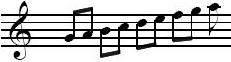
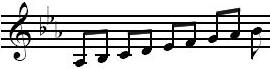
Overview When we say 'bagpipes', most people think of the great highland bagipes of Scotland, and it is with this that we shall start. Other Scottish bagpipes are 'borderpipes' and 'smallpipes'. The Great Highland Bagpipes are extremely loud and powerful - an easy match for a symphonic orchestra, or for a pipe organ in a church. Historically various tuning systems are used but nowadys it is normal to be tuned to equal temperament. If not, it is possible to ask a piper to do this as it involves little difficulty. One serious difficulty with most bagpipes is that they tend to be built above standard pitch of A=440hz. Coming down to this pitch can pose serious difficulties and can also cause a distortion of the sound of the instrument. It is possible to work with reeds and make the bagpipes quiet (relative to norms) and bring them into balance with a string orchestra (5,4,3,2,1 works well). Another major feature of a bagpipe is that it has drones. These are usually tuned to an octave below the chanter, and a further bass drone an octave below that. These can be turned off with the help of corks, in the case of highland bagpipes, but not all other bagpipes have this possibility, nor are all pipers wlling to turn off drones, especially with borderpipes. Bagpipes also have a chanter - this is the part where the fingers create melodies. Important to note is that bagpipes sound continuously and that repetition of notes happens by short, sharp movements of the fingers called 'gracenotes' (they differ in reality a little from other traditions' gracenotes). Gracenotes are also grouped together systematically to form a whole method of playing. This method gives bagpipe music grammar and nuance and without gracenotes bagpipe music can sound senseless. With irregular and unusual gracing, it an also sound senseless and it is worth to be aware of this and refrain from prescribing extensive gracings if they can't changed by the performer. Often as with other instruments, unplayable combinations can, and often are, be presented. For a complete listing of all the basic gracings please go to the author's teach yourself bagpipes website where there is a clear explanation of both the musical function and the method of playing each embellishment. Range Highland bagpipes are diatonic and tend to be tuned to B flat. They are written in a non-standard transposition, for historical reasons. The scale always has a flattened leading note, which in the case of B flat bagpipes means that you should write with three flats. Some professional pipers also have highland bagpipes in A, but it is essential to check with the individual performer you are working with in advance if this is a possibility. It is best assumed it is not. For bagpipes in A, you should be writing with two sharps. The written and sounding range of B flat bagpipes is below:
Basics of Playing As noted above, bagpipes sound continuously and use a system of gracenotes as a kind of musical grammar. By far the safest advice is to leave gracing up to the performer, or to work closely with a piper when preparing your score. In the Teach Yourself Method, each embellishment is described firstly with its musical 'reason to be' and then shown. It would be wise to read this throroughly. Generally speaking, quickly repeated notes do not sound well on bagpipes unless they are one of the established embellishments. This is because gracenotes take time to play and this must be factored into the sound. Other than that, there are no jumps between notes which are unplayable, nor any which are particularly difficult to play. Starting and stopping is not necesarily so easy. It takes time to get the drones started, and they almost always first strike in with a note more or less a semitone out of tune. This may only be a fraction of a second, but it is worth being aware of. Other bagpipes suffer this feature less. The bag needs to be filled and then struck to get the instrument sounding. The conductor, if you are writing for an ensemble, needs to be told to give the piper early notice to get ready.The composer needs to give the piper time to get the drones in and settled. Whilst striking in the drones, one hand will be off the chanter and it is impossible to get both drones and chanter starting together. Another feature of piping is that the performer, despite having 100 decibels on his or her shoulder, can't hear very well, particularly the rest of the group. This should be considered when rehearsing, and also when doubling the bagpipes with other instruments. It can also cause tuning issues. Bagpipes are tuneable like any other instrument and should be in perfect tune, contrary to common belief. If the piper isn't in tune, try asking if they can hear what is happening. One serious issue with tuning is that if something is going to go off, the performer has no contact with the reed and cannot correct problems in situ. It is possible to start and stop the chanter whilst sounding the drones but this can involve a change of pitch in the drones, so it should be kept as a rare action. Staccato effects are not possible, at least in theory. It is worth repeating, these bagpipes are extremely powerful and are best used sparingly, just as one would not ask trombones to blast away for a whole piece - not out of sympathy for the players, but for the listeners. Vibrato is not standard technique on highland bagpipes, but can be played on all notes except the bottom two. Extended technique It is possible to sound the drones without sounding the chanter. This achieved by playing with a lower pressure which can result in the tone being unstable, or at worst, can result in the pitch changing altogether and being unsteady. Unfortunately this is often a question of atmospheric conditions and the piper can't always predict with absolute certainty what will happen although reliability is usually quite good with this. Chromatic notes are made by cross fingering and can be poorly tuned. If your performer uses a plastic reed (which has a lot going for it for professional players in a ensemble setting) then these cross fingered notes will not work. Always either tell the piper before the first rehearsal that there are cross fingerings, or ask if it will be possible. Notes which can be cross fingered are Db (sounding - written as a Cb or C natural) and Gb (sounding - written as F natural or Fb). Less commonly there is A natural (written as G#), which many players will tell you is impossible (it is actually better than the others) and if you want a second octave, it is usually possible to get this by pinching the top hole and overblowing. The notes resulting from this are out of tune and extremely piercing in sound. If you want this effect, it is very striking. It is particularly good in jazz and punk settings. A number of pipers can offer you a bottom A natural if they are given a long note higher than it to prepare. This involves sticking the little finger into the hole at an angle and is quite tricky. Tuning for this note can also be rough. Some slurs or sliding between notes is possible (portamento), and these are best made from lower notes to higher, neighbouring notes. Guidebooks Unfortunately, there are very few guidebooks available which can tell you anything about writing music for bagpipes. By far the best thing to do this direction is to get a hold of some bagpipe music and listen to recordings, together with reading through the teachyourselfbagpipes site to understand what a 'piper really does. |